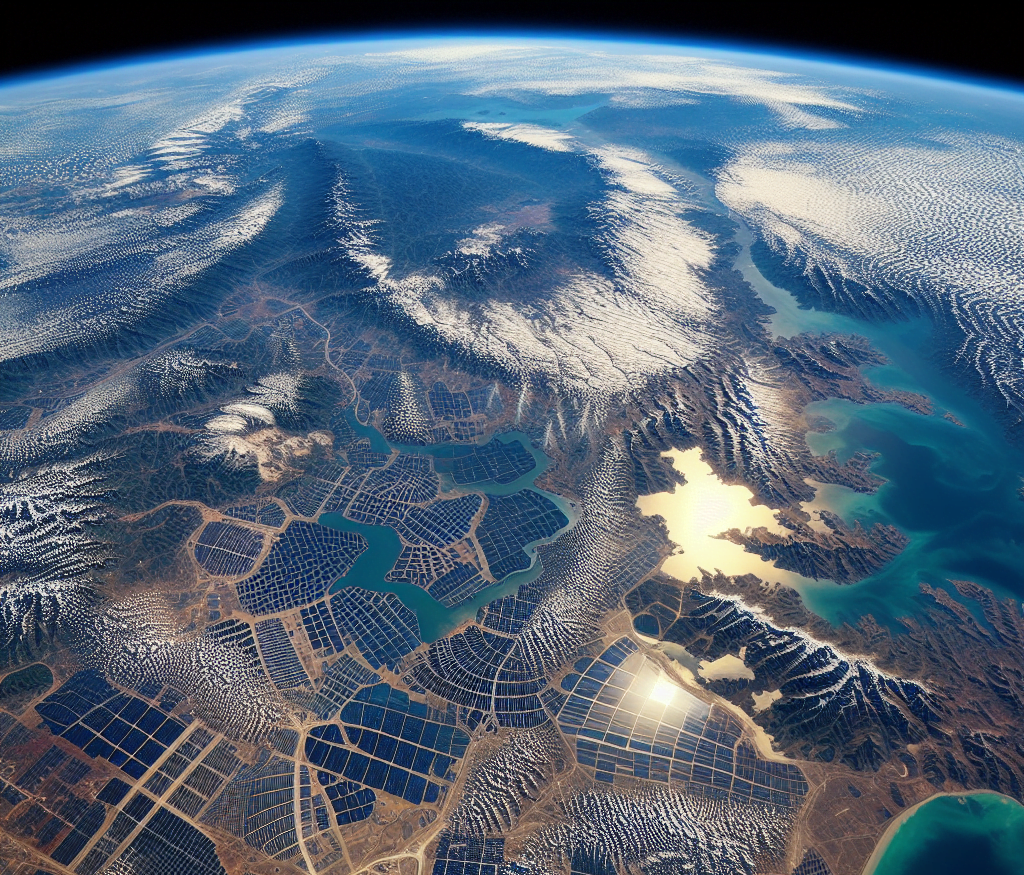
From far away, Earth doesn’t look busy or divided. It looks quiet. Complete. Almost fragile.
When you step back far enough, the noise fades. Borders disappear. Systems reveal themselves. What remains is a single, living place drifting through darkness, held together by thin layers we rarely think about.
This view doesn’t teach us facts.
It changes how we feel about where we live.
Home, Seen Without the Noise

Most of the time, we experience Earth from the inside. Streets, buildings, routines, weather. Everything feels separate because we are standing too close to see the whole.
From space, that illusion disappears.
The planet becomes one connected system. Oceans feed clouds. Clouds shape land. Light, heat, and atmosphere work together in quiet balance. Nothing operates alone.
Seen this way, “home” stops being an abstract idea. It becomes something physical, finite, and shared.
Distance Changes Meaning

There’s something disarming about seeing Earth small.
Not dramatic. Not cinematic. Just distant enough to understand scale.
It reminds us that everything we rely on, food, energy, water, shelter, exists within a narrow margin of balance. Life doesn’t dominate this planet. It fits inside it.
That realisation often sparks a subtle shift. Not urgency. Not fear. Awareness.
Home isn’t guaranteed. It’s maintained.
The Thin Boundary That Makes Everything Possible

From orbit, Earth’s atmosphere appears as a faint edge. Almost nothing. And yet, without it, there is no life, no warmth, no protection.
That thin boundary quietly does all the work.
It filters light. Regulates temperature. Holds air in place. It’s not dramatic, but it’s essential.
The same idea shows up closer to home.
The systems we depend on day to day, power, water, shelter, are often invisible until they’re stressed. When they work, we don’t notice them. When they fail, everything changes.
When Earth Feels Like Home

There’s a reason images of Earth from space feel emotional.
They remove ownership.
They remove scale.
They remove distraction.
What’s left is belonging.
Not to a place we control, but to a place that sustains us.
That perspective doesn’t demand action. It invites care. It encourages designs that respect limits, systems that work with nature instead of against it, and homes that are resilient because they understand where they sit in the larger picture.
Bringing Perspective Back Down to Earth

Seeing Earth as home doesn’t mean withdrawing from modern life. It means designing within reality.
It means understanding:
- where energy comes from
- how water moves
- what happens when systems are stretched
Resilience doesn’t start with products. It starts with awareness.
When you understand the system, the choices become clearer.
A Quiet Reminder

From space, Earth doesn’t ask anything of us.
It simply shows us where we live.
If this perspective resonates, you may also find value in a deeper reflection on how a cosmic view shapes our relationship with Earth.