Yes — sometimes.
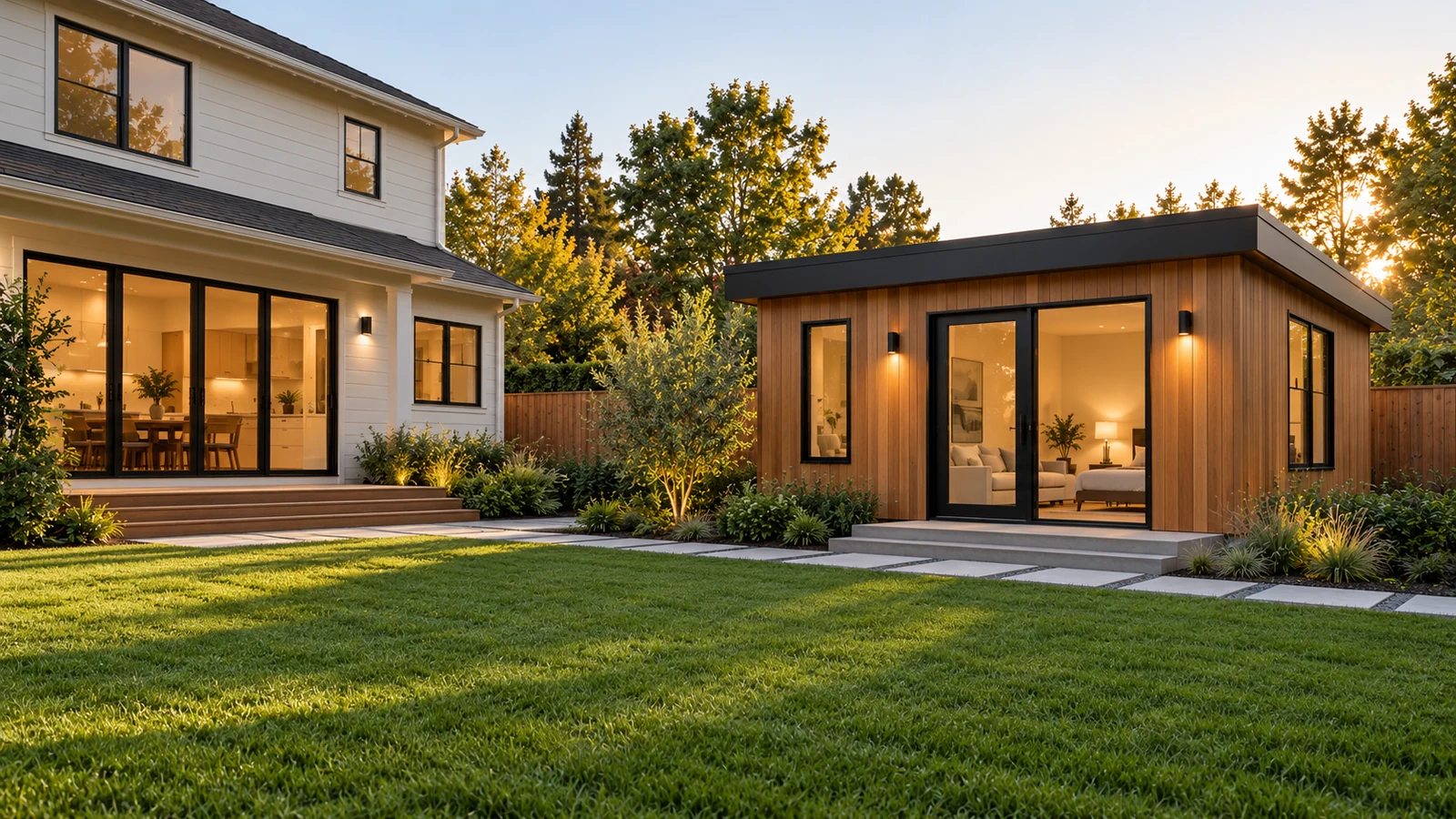
A backyard tiny home can become a legal second dwelling, but zoning, building rules, utilities and how the structure is classified all matter.
Quick answer: A backyard tiny home may qualify as an accessory dwelling unit, or ADU. Check whether your property allows another legal dwelling before buying or building one.
Unused backyard space can offer a housing opportunity. The deciding factors are the property, structure and intended use.
Quick summary
- A tiny home can sometimes qualify as an ADU
- Rules depend on the property and location
- Homes on wheels may be treated differently
- Check the rules before choosing the home
- Power, water and waste still need a plan
Planning a Tiny Home?
Turn the idea into a clear plan.
Work through the decisions that matter before you build.
PLAN YOUR HOMEWhat Is an ADU?
An ADU — accessory dwelling unit — is a smaller independent home on the same property as a main home.
It may be a backyard cottage, converted garage, attached unit or separate small home. The main house remains the primary dwelling.
California’s housing authority sets out the definition in its official ADU guidance.
Is a Tiny Home the Same as an ADU?
Tiny home
Describes the home itself. It could sit on its own land, in a tiny-home community or beside a main house.
Accessory dwelling unit
A second independent dwelling on a property with a main home. A qualifying tiny home can fulfil this role.
A tiny home can be an ADU. Not every tiny home is one.
How Much Have ADUs Grown?
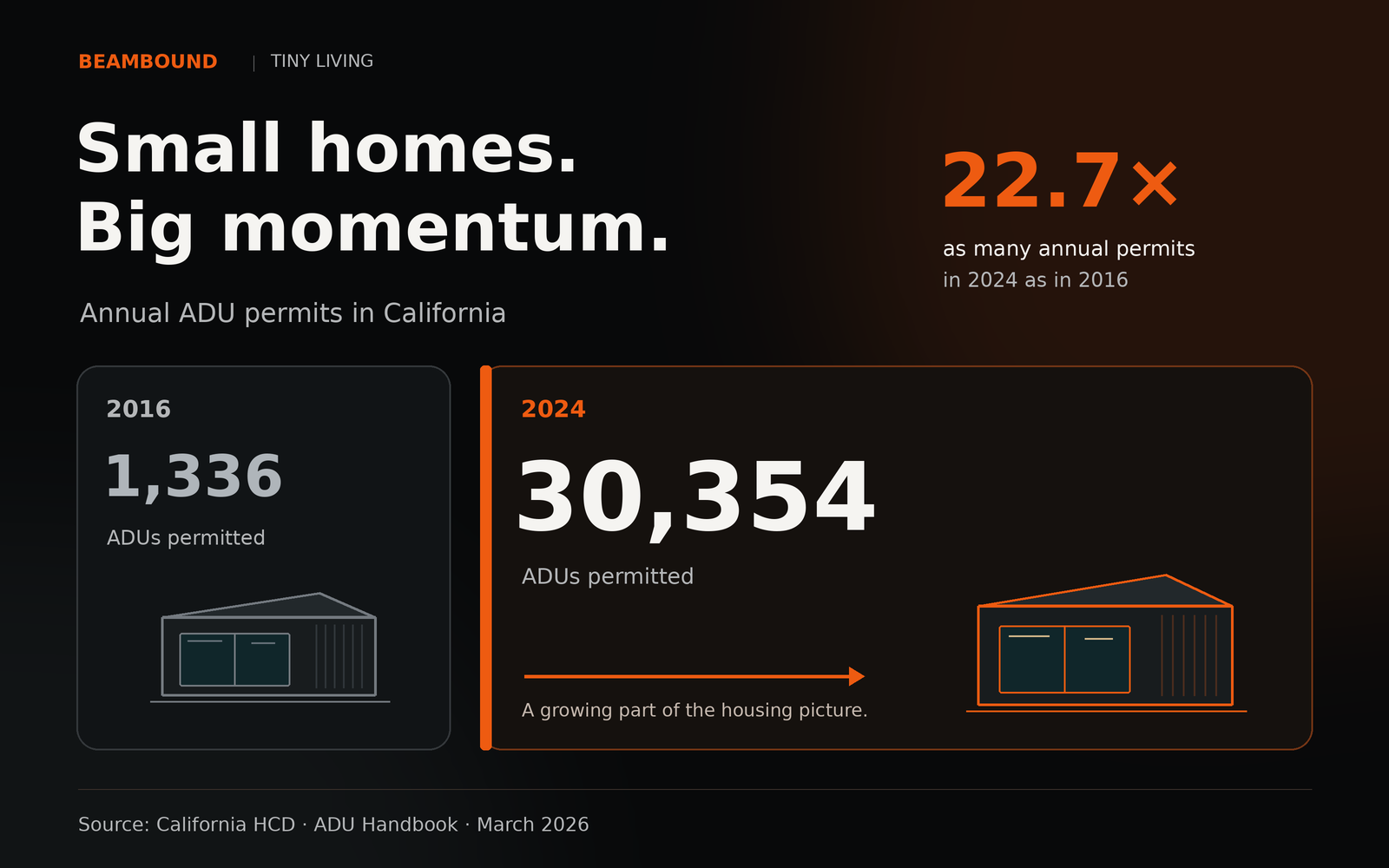
ADUs represented more than 26.6% of all homes permitted in California in 2024. These figures describe California, where ADU rules and permitting differ from other locations.
Why People Choose Backyard ADUs
A second small home can provide space for family, independent guest accommodation, rental housing where permitted, or more use from land already owned.
Can Your Backyard Tiny Home Be a Legal Dwelling?
Check these three areas before spending money.
Can it go here?
Check zoning, setbacks, height, access and building distances. Review HOA rules and covenants.
Can it qualify?
Confirm classification and residential building requirements. Permanent homes and homes on wheels may be treated differently.
Can it be occupied?
Confirm permits, occupancy rules and approved arrangements for power, water and waste.
Owning the land does not automatically give you permission to add a dwelling. Wheels do not automatically bypass the rules.
Is a Backyard ADU Worth Exploring?
Good signs
- ADUs are allowed locally
- The property has usable space
- The structure can meet residential requirements
- Utilities can be handled properly
Potential obstacles
- Another dwelling is prohibited
- The structure cannot qualify as a home
- Placement requirements cannot be met
- Utilities or private restrictions make it impractical
Check Before You Buy a Tiny Home
Begin with the property. Choose the home after checking what is possible.
- Find the right authority
The city or county responsible for the property. - Check permission
Is an ADU or second dwelling allowed? - Confirm the home type
How will your tiny home be classified? - Check placement and utilities
Confirm the site’s practical requirements. - Choose or design the home
Use the property requirements to guide the plan.
Can a Backyard Tiny Home Be Off Grid?
Potentially. Solar, batteries and independent systems may reduce reliance on the main property.
Off-grid does not mean outside the rules. Building, sanitation and occupancy requirements can still apply.
What could future ADU permitting look like?
If annual permits grew 10% each year from the 2024 baseline:
annual permits
annual permits
A hypothetical calculation using 30,354 × 1.10 per year, rounded to the nearest thousand. The 10% rate is an illustrative assumption, not an official forecast or evidence of future demand.
Plan the Whole Home
Layout, power, water, waste, storage and everyday living work best when planned together.
Explore the planning guide
Bring the decisions together in one clear planning system.
EXPLORE THE GUIDEA suitable property, a qualifying structure and a complete plan are the starting point for turning backyard space into a second home.