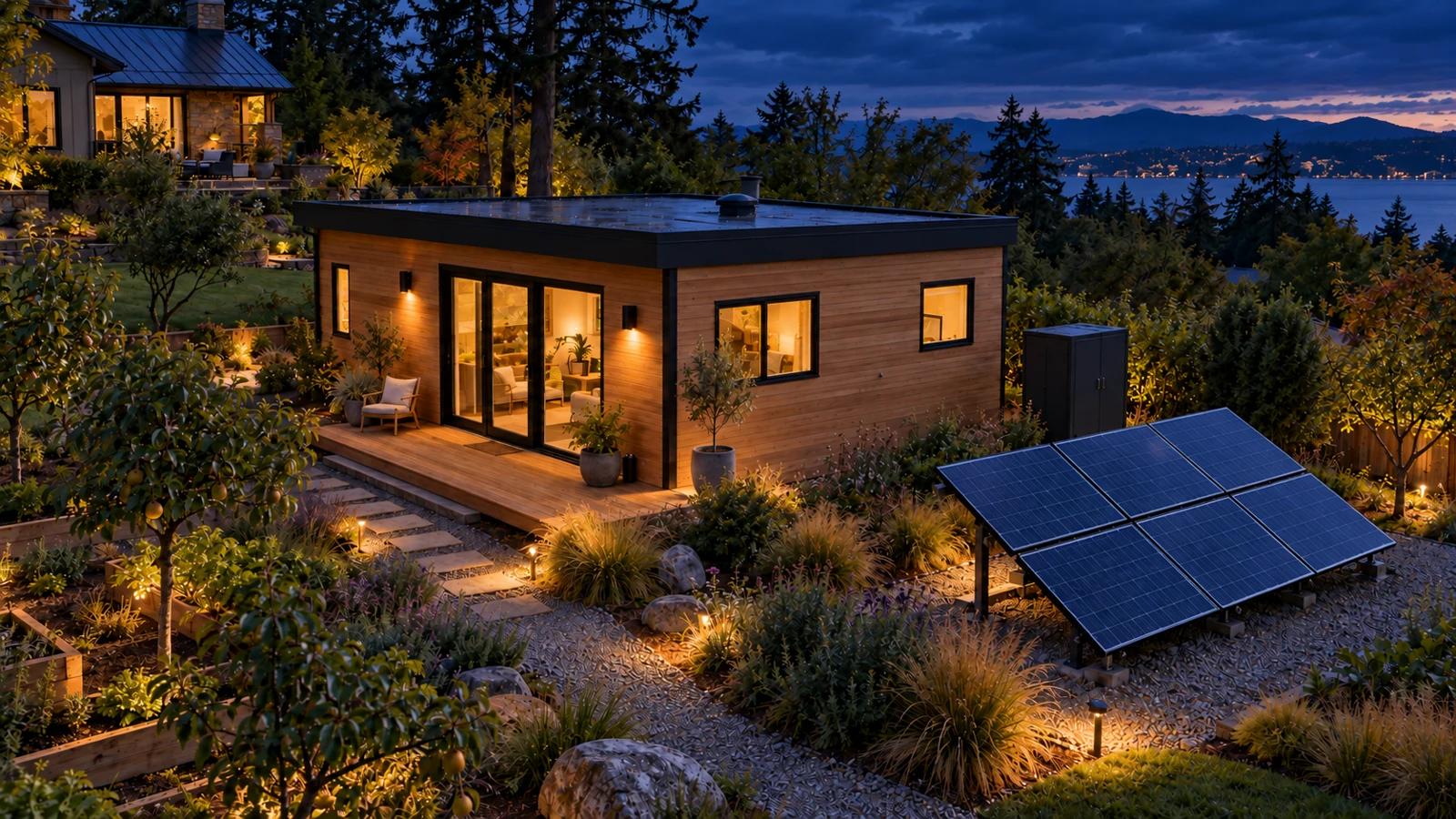
Yes—an ADU can run on off-grid electricity where local rules allow it. Independent water and wastewater systems need their own approval.
Start with the property. Then plan how the home will run.
Hero image: illustrative ADU concept, not a documented off-grid installation.
Quick answer: Check three things before choosing equipment: permitted power, a dependable water supply and approved wastewater disposal.
At a Glance
- Solar panels alone do not make a home off-grid.
- Design power around winter use and low-sun periods.
- Check water and septic capacity for the additional home.
- Confirm local requirements before you buy.
Turn the idea into a clear plan.
Work through the decisions that matter before you build.
PLAN YOUR HOMEHow Independent Do You Want to Be?
An accessory dwelling unit (ADU) is a secondary home on a property with a main home. Its utility setup is a separate decision.
Off-grid power
No electricity-grid connection. Public water and sewer may still serve the home.
Independent utilities
Power, water and wastewater handled on-site, with suitable systems and local approval.
Electricity supplied through the main house still comes from the grid.
New to ADUs? Start with our backyard tiny-home guide.
Can an Off-Grid ADU Be Approved?
Approval depends on your location and the type of dwelling. San Diego County, California, allows qualifying tiny homes on wheels as accessory dwellings and lists off-grid electrical among its project checks.
That is one local route for homes on wheels. Fixed ADUs and other locations have their own requirements.
Source: San Diego County · Tiny Homes on Wheels & Permit Checks
Before you buy: Ask your local building department and water/wastewater authority which utility connections are mandatory and which alternatives they will approve.
Solar Is Only the Beginning
Conventional grid-connected solar generally switches off during an outage. Keeping power available needs suitable backup equipment and configuration.
For a permanently off-grid home, plan generation, storage and backup around daily use and difficult weather.
Source: US Department of Energy · Solar and Resilience
Three Systems. One Workable Home.
Power your daily life
Include heating, cooling, hot water and pumps alongside lights and appliances. Check daily energy use, peak power demand and winter sunlight.
Start with your essentials here; plan the full dwelling system with your designer.
Keep water dependable
Confirm the permitted supply, available capacity and testing or treatment needs. An existing well needs checking for the extra home.
Give wastewater a clear route
Confirm whether sewer connection is required or on-site treatment is allowed. Sharing septic needs approval and enough capacity for both homes.
Remember showers, sinks and laundry when planning wastewater—not just the toilet.
Siskiyou County, California, asks ADU applicants to verify well and septic capacity with Environmental Health, which determines whether existing septic can serve the ADU.
Source: Siskiyou County · ADU FAQs
More buyers see the appeal
Prospective buyers more likely to buy a property because it has an existing ADU:
Your First Four Moves
- Check the property
Confirm that your proposed ADU is allowed. - Check the connections
Ask which utilities are required and which alternatives are accepted. - Check the site
Assess sunlight, water, wastewater and equipment space. - Compare the whole plan
Include installation, upkeep, replacements and backup.
Avoiding a costly utility connection can help, but off-grid does not automatically mean cheaper. Weigh connection savings against batteries, backup, maintenance and replacements.
If your aim is to keep essentials running during outages, also compare a grid-connected home with properly configured solar and battery backup.
Build Independence Into the Plan
Choose the level of independence that fits your property and daily life.
Bring the decisions together.
Explore the planning guide before you build.
EXPLORE THE GUIDE